


When it comes to creating stunning graffiti nails, proper ventilation is not just a luxury; it's a necessity. As a dedicated graffiti nails supplier, I've witnessed firsthand the importance of a well - ventilated workspace. In this blog, I'll delve into what the best ventilation for doing graffiti nails entails and why it matters so much in the nail art industry.
Why Good Ventilation is Crucial for Graffiti Nails
Graffiti nails involve the use of various chemicals, including nail polishes, glues, and solvents. These products often emit volatile organic compounds (VOCs). VOCs are chemicals that can easily turn into vapors or gases at room temperature. When inhaled, they can cause a range of health problems, from mild irritation of the eyes, nose, and throat to more serious long - term issues such as headaches, dizziness, and even damage to the central nervous system.
Moreover, in a confined space without proper ventilation, the strong odors from these products can build up, making the working environment unpleasant and potentially affecting the quality of the nail art. For instance, a nail artist might feel distracted or nauseous due to the fumes, leading to less precise and less creative work.
Types of Ventilation Systems
Natural Ventilation
Natural ventilation is the simplest and most cost - effective way to ventilate a workspace. It involves opening windows and doors to allow fresh air to enter and stale air to exit. This method works well if you have a well - located workspace with good airflow. For example, if your nail art studio is on the ground floor with large windows facing the wind direction, you can create a cross - breeze by opening windows on opposite sides of the room.
However, natural ventilation has its limitations. It depends on external factors such as weather conditions. On a rainy or extremely cold day, opening windows might not be a viable option. Also, in areas with high levels of outdoor pollution, natural ventilation might introduce pollutants into the workspace.
Mechanical Ventilation
Mechanical ventilation systems are more reliable and controllable than natural ventilation. There are several types of mechanical ventilation systems suitable for a graffiti nails workspace:
Exhaust Fans
Exhaust fans are a popular choice for small to medium - sized nail art studios. They work by sucking out the polluted air from the room and expelling it outside. You can install exhaust fans near the workstations where the nail art is being done. For example, if you have a dedicated area for applying nail polish and doing graffiti on nails, placing an exhaust fan above this area can effectively remove the fumes.
Air Purifiers
Air purifiers are another excellent option. They work by filtering the air in the room, removing VOCs, dust, and other pollutants. High - quality air purifiers use HEPA filters and activated carbon filters. HEPA filters can capture very small particles, while activated carbon filters are effective at adsorbing VOCs and odors. When choosing an air purifier, make sure to select one with a high Clean Air Delivery Rate (CADR) suitable for the size of your workspace.
Ventilation Hoods
Ventilation hoods are commonly used in professional nail salons. They are installed directly above the work area and capture the fumes at the source. Ventilation hoods are highly effective at removing VOCs and odors, but they can be more expensive to install and maintain compared to exhaust fans and air purifiers.
Factors to Consider When Choosing Ventilation
Size of the Workspace
The size of your graffiti nails workspace is a crucial factor in determining the best ventilation system. A small home - based studio might only require a simple exhaust fan or a small air purifier. On the other hand, a large commercial nail salon with multiple workstations will need a more comprehensive ventilation system, such as a combination of exhaust fans and ventilation hoods.

Number of Workstations
If you have multiple nail artists working simultaneously in your studio, the amount of fumes generated will be significantly higher. In this case, you'll need a ventilation system that can handle the increased load. For example, instead of a single exhaust fan, you might need multiple fans or a more powerful ventilation hood.

Type of Products Used
Different nail art products emit different levels of VOCs. Some high - end nail polishes and glues might have lower VOC emissions compared to cheaper alternatives. However, if you use a lot of solvents or specialty products for graffiti nails, you'll need a more effective ventilation system. For example, if you often use spray paints for nail art, which can produce a large amount of fumes, a ventilation hood would be a better choice.
Our Graffiti Nails Collection
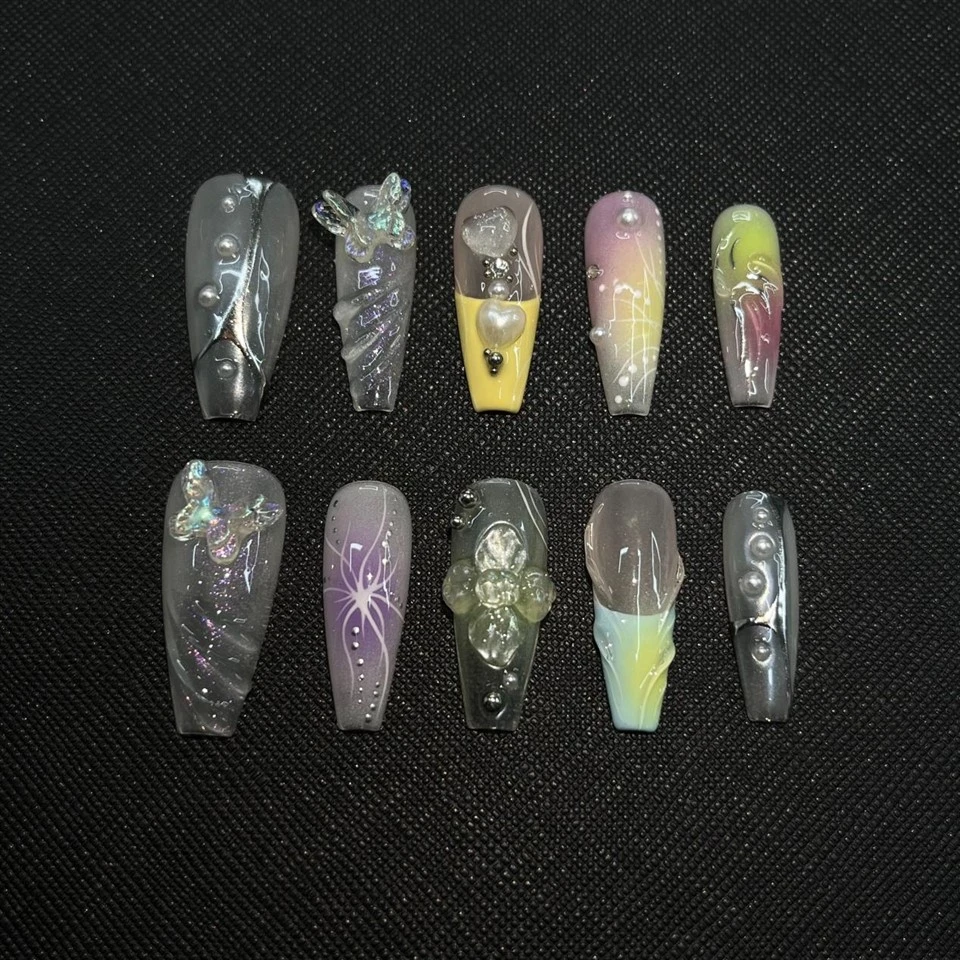
At our company, we offer a wide range of Cartoon Graffiti Nails, Butterfly Painting Nails, and Cutieip Graffiti Nails. These products are crafted with high - quality materials and unique designs, but we also understand the importance of a safe working environment for those who use our products. That's why we encourage all our customers, whether they are professional nail artists or DIY enthusiasts, to ensure proper ventilation when working with our graffiti nails.
Conclusion
In conclusion, the best ventilation for doing graffiti nails depends on various factors such as the size of the workspace, the number of workstations, and the type of products used. Whether you opt for natural ventilation, exhaust fans, air purifiers, or ventilation hoods, the key is to ensure that the fumes and pollutants from nail art products are effectively removed from the workspace.
If you're interested in our graffiti nails products or have any questions about ventilation for nail art, we welcome you to contact us for procurement and further discussions. We're always here to provide you with the best products and advice to make your nail art experience safe and enjoyable.
References
- "Indoor Air Quality in Nail Salons" by the National Institute for Occupational Safety and Health (NIOSH)
- "Volatile Organic Compounds (VOCs) in Indoor Air" by the Environmental Protection Agency (EPA)
